To any and all who actually read this, I've been rather behind. I've actually kept up the movies (however even that isn't going as fast as I may have wished, but such is life) and in fact am about to watch "Pocahontas." So as you can see, I'm REALLY behind. But I've been busy looking for work and also been feeling a bit lazy when I could have the time to work on this, it's starting to feel like homework and it needs to feel like fun for me to do it.
But I have a number that Is tarted and have not finished and I hope to at least have those posted within the next few days. Thanks everyone!
Showing posts with label Disney. Show all posts
Showing posts with label Disney. Show all posts
Friday, July 9, 2010

Monday, June 28, 2010
"We'll go for a jolly ride!"
 Film: "The Adventures of Ichabod and Mr Toad"
Release Date: 5 October 1949
 Director: Jack Kinney, Clyde Geronimi, James Alger
History: One of the hallmark of great Disney Animation has always been to take classic literary fiction or fable characters and "Disney-ise" them. "Snow White," "Pinocchio," "Dumbo," and "Bambi" all did this is the earliest days of Disney, as well as "Bongo" and "Mickey and the Beanstalk," the two shorts that make up "Fun and Fancy Free." "The Adventures of Ichabod and Mr. Toad" was a return to this, taking on two of the greatest and most popular literary characters in fiction, J. Thaddeus Toad from the British story "The Wind and the Willows," and Ichabod Crane from the old American story "The Legend of Sleepy Hollow."
 Walt would cast and use the voice talents of J. Pat O'Malley (in his first of many Disney roles), Basil Rathbone (of "Sherlock Holmes" fame, and the inspiration for the name of the main character from 1986's "The Great Mouse Detective), and Bing Crosby. Many of Walt's famed "Nine Old Men" would be animation directors for this film, and film and animation fans that look closely will note that the style of animation in the segment in the "Mr. Toad" part of the film where Mr. Toad and friends are being chased by Mr. Winky and the weasels, was re-used in "The Jungle Book." This is becuase on "Mr. Toad," Wolfgang Reitherman worked on this part of the film and later was the director for "The Jungle Book," which he directed, and loved re-using his work when the chance would come. The film earned a Golden Globe in 1950 for best use of color.
 The film's two parts would later be re-released as long shorts independently with "Sleepy Hollow" being re-released as "The Legend of Sleepy Hollow" in 1958 and "Mr. Toad" being re-released as "The Madcap Adventures of Mr. Toad" in 1978. The Headless Horseman scenes would alter be used in many different Disney Halloween themed specials. Many of the characters from "Mr. Toad" would be re-used in 1983's "Mickey's Christmas Carrol," as well as cameos in 1988's "Who Framed Roger Rabbit" and on tv in 2000's "House of Mouse."
My Reaction: This has always been my favorite of the "package films." Both stories feature characters that are full of life, with stories that are filled with lots of action and a few touching moments. You really get a feeling that Mr. Toad's friends care about him. Then on the excitement side of things, that bit at the end where the headless horseman lobs his pumpkin head right at the screen! I remember getting goose bums as a kid when that was on. But as an adult, I take away from "Mr. Toad" the values of responsibility and friendship/ loyalty, and the lesson from "Sleepy Hollow" that one should never be too proud a mighty of one's self. That you get reckless when you start down that path. Also, don't go walking through woods where headless horsemen ride.
 I think either story could easily have been stretched out and stand on it's own as a single feature-film. And it is really too bad that that didn't happen. That said, I do think that "Mr. Toad" was the stronger story told here in this film. Walt however, was still recovering monetary losses from World War II at that point and wasn't ready just yet to get back to single stories for his film. Thankfully, his next film, 'Cinderella," would be that proper return that his audience was waiting for.
My Wife's Reaction: She really enjoyed it as a kid, but as an adult, it was annoying to her.
 My Final Grade: (B+) To me, this has always been and always will be the best of the "package film" era. I'm actually sad that neither story ended up it's own, full-length feature, as either could hold it's own well enough.
All images copyright Disney. All rights reserved.
Sunday, June 27, 2010
"Here's a tall tale straight from the chuck wagon, just the way the old-timers used to tell it."
 Film: "Melody Time"
Release Date: 27 May 1948
 Director: Jack Kinney, Clyde Geronimi, Hamilton Luske, Wilfred Jackson
History: Walt Disney, still recovering from the lack of revenue for the studio as a result of World War II, was still stuck with "package films" to try and recover costs as of 1948. So, he tried the the same formula he had used on "Fantasia," and especially "Make Mine Music" once last time. "Melody Time," was more like "Make Mine Music," as it was "a concert feature" of popular music at the time. Unlike the latter, it worked a lot better, and despite not a very good original box office run, critics years later give it a lot more praise.
 This time, Disney brought in such popular musical talent such as Buddy Clark, The Andrew Sister (back again in a Disney Animated Classic), Dennis Day, Freedy Martin, and maybe the most famous of the bunch, Roy Rogers and the Sons of the Pioneers. Many of the segments have been shown on their own in places like Disney Channel, and as such, have build up more popularity on their own. In 1998 on VHS, and then again in 2000 on DVD, the "Pecos Bill" segment was edited in the US. All the parts when Pecos is smoking have been cut out. The international versions are still intact however.
 My Reaction: This coming November 2010, Walt Disney Animation Studios will release their 50th Animated Classic, "Tangled." But, 40 Disney Animated films before that, there was "Melody Time," Disney's 10th animated film and fifth in the six "package films" of the 1940's. Looking back, this "Melody Time" was a great film for what it was, but what it was was not necessarily Disney's best. But, I personally feel that the shorts found in this film are over all better then the collective of shorts found in "Make Mine Music." My favorites from this film would be "The Legend of Johnny Appleseed," "Once Upon a Wintertime," "Blame It On the Samba," and "Pecos Bill."
My Wife's Reaction: She really enjoyed the better known segments from this. Pecos Bill may be her favorite though. But for her, she remember these segment on their own, as broadcast on Disney Channel, so it was odd for her to see them in tehir original format in this film.
 My Final Grade: (B-) This package film had it's moments of greatness and not so great moments. But, I may be harsher on it after four previous package films in a row before it. But, I liked it as a collection much better then "Make Mine Music."
All images copyright Disney. All rights reserved.
Saturday, June 19, 2010
"You know, you worry too much. In fact, everybody worries too much."

Film: "Fun and Fancy Free"
Release Date: 27 September 1947
 Director: Jack Kinney, Bill Roberts, Hamilton Luske, William Morgan (live action)
History: Mickey Mouse is arguably the most famous and successful Hollywood star, real or fictional, to even grace the silver screen. Walt Disney, in part as a result of the reality, and in part becuase of the fact that Mickey was where his company started, and becuase mickey was his alter-ego, wanted nothing more then to make sure Mickey's star would shine as long as it could and as bright as it could. To that end, Walt was interested as he was making full length featured animated films, to start his beloved character as much as he could. Mickey stared in the very popular segment in "Fantasia," The Sorcerer's Apprentice, and Walt was really keen on putting Mickey in more films. Walt was interested in the story of Jack and the Beanstalk, and especially after Mickey's 1933 short, Giantland, felt that placing his beloved mouse in the staring role of that film would be a wonderful choice. Interested in making it a full length film, Walt once again faced the same issues faced that lead him to make the last three "package films," a lack of funds thanks mostly to World War II, so the project was dropped for a time.
 Then a few years latter, needing a new film to be made, Disney picked the project back up and made the decision (based purely on cost) to pair it with another story that had be considered for a full length film, Bongo. Disney paired Mickey with long time pals Goofy and Donald Duck for the Jack half of the film, but needed some star power he felt for the Bongo part of it. So he brought in what at the time was possibly his fourth biggest and most popular character to act as a guide for the whole film and something of a partial narrator for Bongo, Jiminy Cricket. The famous cricket had not been seen since his debut in "Pinocchio," and Walt was ready to bring him back. The move would make it so that Mickey, Goofy, Donald and Jiminy Cricket would be the only four characters to appear in more then one of the Disney "Cannon" Animated Films under Walt Disney (after Walt died, the heroes of "The Rescuers" would go on to be the only other characters with that distinction). Jiminy Cricket would later been seen on tv in a number of various programs, most notably his "I'm No Fool" series, and then reunite on the silver screen with Mickey, Donald and Goofy in "Mickey's Christmas Carrol." This film would also be notable for being Walt's last performance theatrically as Mickey Mouse, and one of his last period.
 Walt then decided to give the film more bang for the film goers buck, to add some live action segments featuring popular ventriloquist (and father of "Murphy Brown's Candice Bergen) Edger Bergen, with his puppets (and alter-egos) Charlie McCarthy and Mortimer Snerd, along with child actress Luana Patten, to tell the story of Jack and the Beanstalk, while Dinah Shore, who as just in the last Disney animated film, would narrate "Bongo," as well as sing a number of songs. Doing well enough at the box office, both halves of this film would be show on tv separately many time through the years, especially Mickey and the Beanstalk, which would be re-narrated by both cartoon character Ludvig Von Drake and long time Disney voice veteran, the guy originally meant to narrate the story, Sterling Holloway.
My Reaction: My feeling for "Fun and Fancy Free" are mixed. I think it is really sad that both stories were not allowed to be the full films they were meant to be, and think in the long run that may have hurt them, most notably Bongo. Bongo was originally going to be a sort of/ kind of sequel to "Dumbo," but was heavily scaled down to fit into this film as half of it. It was a good story, and I think if given the time to explore the main characters and add more depth to them, could have been really special. But instead it felt like just what it was, a filler to a Mickey Mouse film. Maybe part of it was just that, that as the film goes on, you feel like you can't wait to see Mickey, maybe part of it is that the film speeds up parts and stret ches out parts, and on both sides does it to the wrong parts? But all in all, I enjoy watching Bongo the circus bear more then the previous films made by Disney since "Bambi." "Fun and Fancy Free" is the closet film since "Bambi" to get back to that original "feel" of Disney Animated Films.
 The second half of the film is without much doubt the best part of it. But, that said, it is still really sad that Mickey and the Beanstalk never got to be it's own film. Unused animation and story ideas, including Mickey selling the cow to the Queen of Happy Valley (Minnie Mouse) and then having "Pinocchio" foe, Honest John be the one to sell Mickey the "magic beans" could have been awesome. Like Bongo, it felt rushed and drug out at the wrong moments, just not to the extent of Bongo. But, that said, it is really easy to see why of the two parts, it has been shown and released on home entertainment formats the most. As for the live action bits, while a fan of Edger Bergen, I was sad that Walt felt the need to add any live action to any of his "fully" animated films, and was happy when he stopped by the 1950's.
My Wife's Reaction: She enjoyed it, but had never seen the original version of Mickey and the Beanstalk. Being as she grew up only ever seeing the re-released version with Ludvig von Drake narrating it, she had a hard time watching the original version as she prefers the later version.
 My Final Grade: (B-) Great film as the "package films" go, with Bongo being the weaker portion and Mickey and the Beanstalk being the better half and best reason to watch it.
All images copyright Disney. All rights reserved.
Wednesday, June 9, 2010
"You know, Donald, you have more relatives than there are coffee beans in Brazil. "

Film: "Three Caballeros"
Release Date: 3 February 1943
 Director: Normand Ferguson
History: "Three Caballeros" was both the second of the "package film era" of Disney Animation and the second of the South of the Boarder propaganda films. But, unlike "Saludos Amigos" and other propoganda shorts made in the time period, "Three Caballeros" is a bit more hard to tell what it really is. The premise of the film, just like the other films of the 1940's, is a string of shorts put together and released as a full film. For "Three Caballeros," the film is held together by Donald Duck's birthday. Donald receives a few gifts from his friends South of the Boarder and each gift is used to tradition into the next short.
 This would be Donald Duck's second theatrical film appearance, his first being in "Saludos Amigos", and first where he basically was the main star. He would later appear in "Fun and Fancy Free," "Fantasia 2000," and make cameos in non-Cannon Disney films "A Goofy Movie" and "Who Framed Roger Rabbit?" "Three Caballeros" features many major film and music stars from South American countries of that era, including famed Mexican composer Manuel Esperon, as well as singers Aurora Miranda, Dora Luz and dancer Carmen Molina. It was originally released in Mexico City on December 21, 1944, and then released in the States on February 3, 1945. It was the last Disney film to be subsidized by the US Government as well as the last released during the second World War.
 My Reaction: Again, I'm not a fan of the "package film era." As far as this film goes, there are a few shorts that I like, the opening about Pablo the Penguin is perfectly find by itself, the flying donkey makes a great short and the short "Las Posadas, about Mexican children at Christmas time is a great educational short, but beyond that I'm not fan of this film.
 I found much of the rest of the film as odd, strange and even more odd when you keep in mind this is a Walt Disney film. True, Disney even had odd moments, but the ones found in this film takes the cake, save for maybe the "Pink Elephants of Parade" segment from "Dumbo" and "Heffalumps and Woozles" from "Winnie the Pooh"!
My Wife's Reaction: She likes this film for the simple reason it was a childhood favorite growing up and her mom the teacher would show it to her Spanish kids in Spanish.

My Final Grade: (C+) I'm not a fan of the "package film era" as a whole. That said many of the shorts that make up the six films in this era of Disney Animation are some of the studio's best work, but on the whole I'm not a fan. Disney's best films are single stories. This film, while maybe one of the best in the series and maybe best known, was a disappointment to me and is more in my collection for completest and historical reasons.
All images copyright Disney. All rights reserved.
Sunday, June 6, 2010
"I'll bet his mother and dad will be proud of him. Just a natural born flier."
 Film: "Saludos Amigos"
Release Date: 24 August 1942 (Brazil), 6 February 1943 (USA)
 Director: Norman Ferguson, Wilfred Jackson, Jack Kinney, Hamilton Luske, Bill Roberts
 History: "Saludos Amigos" was the sixth Disney Animated film, and first of the "package film" era. It was the culmination of a bunch of different things going on at the same time. World War II was going on, and while at the time that this film was made, the US had not gotten into the war yet, but worried as many Latin Nations were forming ties to Nazi Germany. Meanwhile, the same war was hurting the Disney Studios financially and in May of 1941, the studio had a strike during the production of "Dumbo." All in all, this lead to many worries for the studio, as well as for the country.
 It was after the Disney Studio strike that future New York State Governor and US Vice President, Nelson Rockefeller, who at that time was head of the Latin American Affairs office in the State Department, suggested to Walt a goodwill tour of Latin America of behalf of the US Government. The US Government was happy as it meant that they would be sending down arguable one of their most popular citizens to Latin America as an ambassador of sorts, in hopes of it leading to ties being broken with Germany and forged with the US instead, and Walt was happy as the film he would make would be paid fully from government subsidies and tensions at the studio would ease while he was gone. Walt and the group from the studio that went with him, visited Brazil, Argentina, Peru and Chile. The film was first released in Brazil, but finally show in the states in early 1943. It had mixed reviews, but was popular enough that the Studio made one more Latin film, "The Three Caballeros."
My Reaction: To me, the "package film era" was a very bleak moment in the history of Disney Animation. It was for the most part an out come of World War II and really acted as more of a flotation device for the choppy financial waters the studio was in as a result. The first two films in this series, of which this was the first, acted as more of a propaganda film then anything else. It was meet with mixed reviews when it came out for a reason. Instead of the single, traditional story telling Disney was starting to be know for with his first five film, this was essentially a bunch of short subject cartoons, strung together with live-action footage of Walt and his group in Latin America. It defied the image of what a Disney Animated Film should look like, and most likely even angered some in 1943. But, it very much has to been seen with historians glasses, as again it was a direct result of World War II, and like many things, the War interrupted much of what was normal, everyday life in the United States, and even the whole World.
 I think for what it was though, it was a good film. It is not a film I reach for when I want to watch Disney movies and is more of something I watch when I'm doing something like this marathon or for more historical reasons. It very much feels like just what it is, a series of Disney shorts staring Donald Duck and Goofy. The shorts themselves aren't even necessarily Donald or Goofy's best work, but still fans of either character will find enjoyment here.
Modern day releases of this film on DVD find a most confusing situation. Several seconds of animation depicting Goofy smoking were cut. Now while I can understand the thinking behind this, but feel there is room in this World for a DVD of both versions, the thing I don't get is why Disney didn't feel the need to cut scenes of smoking in this film from Joe Carioca or even Walt Disney himself! Then when you take into consideration that later, they did the same thing in "Melody Time" to Pecos Bill, but leave the smoking that once again Joe Carioca does as well as the smoking Pinocchio does in his film intact and the smoking Goofy does intact on the "Walt Disney Treatises" release of his shorts, you start to scratch your head. It slightly baffles why they chose to edit somethings but not others. Don't get me wrong, personally I've VERY anti-smoking and will argue for "family friendly edits" of film to the death, but the logic in this instance leaves me wondering what were they thinking? I think once again, there is room in this world for both versions.

My Wife's Reaction: She seemed ok with it, but it didn't seem to hold her attention as much.

My Final Grade: (C-) It is hard thinking of this film as a film in many ways and the shorts that make up the bulk of the film are not necessarily the best. In fact in many ways, this film felt more like a documentary mixed with Disney Animation and I'd guess would have better shelf life seen as something to show a history class in school then as family entertainment at home. But, for what it is, it was fine and there are many interesting facts about life in Latin America.
All images copyright Disney. All rights reserved.
Thursday, June 3, 2010
"If you can't say something nice... don't say nothing at all."
 Film: "Bambi"
Release Date: 14 August 1942
 Director: David Hand
History: Walt Disney's fifth animated film had an interesting start as a movie. It originally was planned to be a live-action film for MGM. Producer/ director Sidney Franklin originally bought the rights to the original novel by Felix Salten in 1933, but after it was decided it would cost to much at the time for a live-action version, Franklin sold the rights to Disney, who was so excited about the story, he intended it to be the second animated film his studio made after "Snow White." But production for the Disney film version slowed down until 1939 as Disney worried that the original story was too dark and grim for a family audience, and then the studio got busy on other projects before finally returning to this one.
 Disney wanted a very realistic look for his deer, and had his animator visit the LA Zoo often, had an animal painter, Rico LeBrun, come it to give lectures on how to capture realistic looking animals in art, and had a pair of fawns delivered to the studio from Maine. A small zoo was also established on the studio grands filled with rabbits, owls and ducks, as well as other small forest animals. But the realistic approached slowed down production as animators of the day were not used to drawing realistic animals. This ultimately lead to Walt Disney cutting 12 minutes of originally planed film to save on production costs and to get the film made faster.
 "Bambi" proved to be a third financial loss for Disney in it's original release. A small reason for this was a national outrage from hunters who called the film"an insult to American sportsmen." But the biggest issues once again was World War II. This time Walt not only lost the international markets of Asia and Europe, but now he lost the North American markets as the US had entered the war. In years since, the film had become much more profitable, as well as very critically acclaimed. It also proved to be a much needed project for the Disney Animators who because of the film were now able to animated more cartoony characters like Mickey Mouse, or more realistic characters like Bambi, thus giving them far more range as animators and artists.. Likewise, a number of colors were invented for "Bambi" that would be used on future projects. It also served as a stepping stone for Walt Disney's "True Life Adventure" series later that pioneered the nature film genre.
My Reaction: I find myself mixed with this film. The growing nature lover in me simply adores this film, and seen from that angle, find it a very satisfying film. But the story teller in me, or the part of me that wants to be entertained with these films, finds it a bit of a bore at times, not always, but sometimes. I found that to be the case this last time I watched it, almost wishing that instead of the characters talking, we would get some kind of nature documentary narration. But I don't think it was necessarily the subject matter so much as it was the story. "Bambi" was a very "episodic" film, essentially showing various moments of his life, and life in the forest period. But I felt that many of these moments didn't feel very connect to the over all story, which I find myself still trying to figure out what that was, and felt more like the various package films Disney would make after this one, but with the same main character in each "short." But, the few "shorts" in the film that did deliver, delivered.
 First and foremost was the scene where Bambi's mother dies. It wasn't the actual death itself that was so captivating, but rather the reaction young Bambi has right after. You can tell he is frightened and confused, and the Disney animators capture that moment so well. While maybe not animals being hunted, I think everyone who reads this or doesn't can relate to at least one moment like the one Bambi had after the death of a loved one. The Second moment that really catches my eye is the exciting climax, where we first find Bambi in a struggle to fight off the other male deer for the affection of his beloved Feline, and then when he fights off the hunters dogs and the devastation of the destructive forest fire caused by the neglect of the hunter(s).
 I've always been amazed at the realistic drawings found in Bambi and the gorgeous forest backdrops. There are many animated film today, Disney or otherwise, that can say it benefited from this films realistic direction. It set new standards for the animated film that we can still see today.
My Wife's Reaction: She liked it. She, like me, has an interest in animals, so this film did a good job of tapping into that interest.

My Final Grade: (B) Similar to "Fantasia," but for different reasons, I have to be in the right mood for "Bambi," other wise it bores me. But, my growing interest in the natural world and animals seems to suck me into this film. If it was an animated nature documentary (which sometimes it feels like it wants to be), then I'd say it is wonderful. But as a film for entertainment value, it is not Walt's best work. But still, the gorgeous backgrounds and realistic animals are worth watching the film just on those merits alone.
All images copyright Disney. All rights reserved.
Monday, May 31, 2010
"Congratulations to you, Mickey!"

Film: "Fantasia"
Release Date: 13 November 1940
 Director: James Alger, Samuel Armstrong, Ford Beebe, Norman Ferguson, Jim Handey, T. Hee, Wilfred Jackson, Hamilton Luske, Bill Roberts, Paul Satterfield, Ben Sharpsteen
History: It's no secret that both Walt Disney and his wife, Lillian, were big fans of classic music and the arts. Anyone who has ever lived in LA the last few years can tell you about the Walt Disney Concert Hall, where the LA Philharmonic play. The Disney Consert Hall gets it's name from the original contribution Lillian Disney made as a gift to the arts and Los Angeles, two things both of the Disney held fondly in their hearts. It comes as no surprise then at first glance that Walt would make a film like "Fantasia." But, upon review of the history of the film, one would discover that it was not love of classical music that originally was the genesis behind "Fantasia," but rather another one of Walt's great loves: Mickey Mouse.
 Get into the late 1930's, the Mickey Mouse shorts were loosing popularity and it seemed more of Walt's audience wanted Donald Duck shorts instead. But Walt didn't want to give up on his most famous character and devised an idea for what was to be Mickey's big come back. Walt started work on a short for Mickey based on the 1797 poem by Goethe, Der Zauberlehrling, better known in English as The Sorcerer's Apprentice, with the music based on the L'apprenti sorcier, which was scored by Paul Dukas and based also on the original poem by Goethe. The animators really got into it and even had a little bit of fun at the bosses expense, naming the sorcerer Yen Sid (Disney spelled backwards). But after the extra long, nine minute short was made for the extremely large amount of $125,000, a very expense price tag for a short at the time, Disney was worried about actually releasing it by itself. It was a suggestion by conductor for the short Leopold Stokowski (who Disney had met early in 1938 while the short was being made, and graciously accepted the job of conducting, and doing it for free no less) to instead of releasing as a single short, add other segments and turn it into a full blown film. As a result, a new kind of animated film was formed, and The Sorcerer's Apprentice was joined by Fugue in D Minor, The Nutcracker Suite, The Rite of Spring, The Pastoral Symphony, Dance of the Hours, and last but not least, Night on Bald Mountain/ Ava Maria.
 As production of The Sorcere's Aprentas turned into "Fantasia," Walt's vision for the project started to change. This was not meant to be a simple animated film like "Snow White" or the at that time in production "Pinocchio" was, but a place where animation, classic music, and pure art met to create what Walt called "The Concert Feature." As a result, he treated it like a fancy concert, complete with reserved seating in the theaters in the theaters that showed it, as well as expectations of fancy dress to those who attended, a program featuring production pictures, credits and synopsis for each segment and dedications by both Stokowski and Disney, an intermission and live action host (Deems Taylor) who would come out and provide introduction before each piece. Taylor's segments would also be the first time (of many) that live action would be used in one of the Disney Animated Masterpieces. Walt also commissioned the creation of a new, multi-channel sound system known as "Fantasound" in every theater playing "Fantasia." "Fantasound" would turn out to be a form of stereophonic sound, making "Fantasia" the first commercial film to use such technology.
 Despite the hard work and innovative approaches, upon it's original release, "Fantasia" would be a box office bomb, partly as was the case with "Pinocchio" because of the loss of the European and Asian markets due to World war II, and part because audiences in the US and other markets that did see a release just couldn't get into a "Concert Feature" at that time. This, as well as the box office failure of "Pinocchio," left Disney in a lurch and made sure that Disney's original idea for the film, of being re-released each year with a mix of old and new segments, just like a classic music concert, would not happen. Ultimately, while not the original idea totally, it would spawn a squeal in "Fantasia 2000" some 60 years after it's original release. Despite the original set backs, and a few harsh criticisms over the years, most critics would go on to praise "Fantasia" and it was able to make the original money lost and some through it's various re-releases in theaters over the years and finally home video and DVD.
My Reaction: Blame it on my ADHD if you wish, or just say that I'm just not "cultured enough" to appreciate it, but I just don't get into "Fantasia" that much. That is not to say that I don't find myself enjoying classical music at all, as in fact as I've grown older I find that from time to time it is very soothing to my soul. But, I have to be in the right mood to enjoy it, other wise it's wasted on me. The same goes for "Fantasia." Upon watching the film again, I discovered this is still the case.
 But that said, I find I can easily watch by itself The Sorcerer's Apprentice and Night on Bald Mountain segments just about anytime. This may be in part due to the fact that both segments are easily the most accessible and well made shorts in the film and have had many Disney Channel showing over the years. The historical significance is never lost on me, as is the case for what the film did to the animation medium period. As a die hard fan of animation, that is never lost on me. Upon watching this film again, I discovered that when in the right mood of course, "Fantasia" can be a very satisfying film. But if watched when not in the right mood, it will bore you to death like no other!
My Wife's Reaction: She got board at times it seemed, but over all seemed to enjoy it.
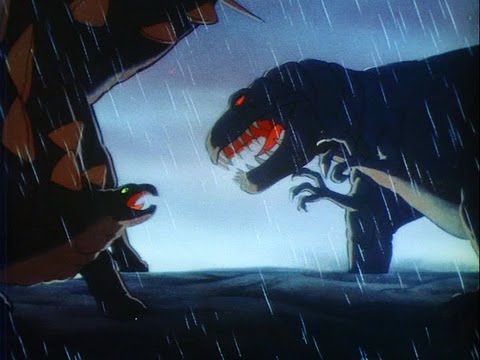 My Final Grade: (B-) I have to be honest, while I enjoy one or two of the segments, this is not one of my favorite Disney animated films. It's also however not my least favorite either. While I enjoyed the format update found in "Fantasia 2000" a lot more, I can still appreciate the leaps and bounds of what Walt was doing to the animation format with this film. He may have originally meant to save Mickey's career, but what he ended up doing was showing that animation didn't have to always be gags and funny stories, that sometimes it could truly be an establish, respected art form in the style of classical music and paintings.
All images copyright Disney. All rights reserved.
Sunday, May 30, 2010
"What does an actor want with a conscience, anyway? "

Film: "Pinocchio"
Release Date: 9 February 1940
 Director: Ben Shappsteen, Hamilton Luske, Norman Ferguson, T. Hee, Wilfred Jackson, Jack Kinney, Bill Roberts
History: After the success of "Snow White," Walt Disney was ready to follow it up with more animated films. The first of these would be "Pinocchio," based on the Italian story by Carlo Collodi. It went through some very heavy changes when it was originally being worked on as Walt felt it need a different approach them the one that was being used for the film at the time. Some of the biggest changes were to the leading characters of Pinocchio and Jiminy Cricket. For Pinocchio, Walt felt that the direction that was being used, making him more of a sarcastic wise guy, like the original story, wouldn't work and liked the idea of him being played more as an innocent character with a deep sense of wonder and amazement about the World. In the case of Jiminy Cricket, his role was expanded to what it is now in the film with him take a less "insect" look and more of a "human" look.
 While "Pinocchio" has gained the love and admiration of countless fans and film critics and historians over the years, it was originally a failure at the box office. Part of that was due to World War Two, which saw the film get a delayed release in the valuable international markets of Asia and Europe. But thanks to it's myriad of re-releases over the years and VHS, DVD and Blu-Ray sales, it has more then made up it's original box office losses. It was the first animated film to win a serious Oscar at the Academy Awards, winning for both Best Song (When You Wish Upon a Star) and Best Scoring of a Musical Picture. In 1994, it was added to the United States National Film Registry and has made all manner of top ten lists over the years.
My Reaction: I had just seen "Pinocchio" a few moths ago with my then fiance (now wife), so it was still fresh in my mind. But what I have noticed is how the older I get, the more I enjoy this one. There is something about the story of the wooden boy who wants to be a real boy that does a very good job of capturing my attention. The grand adventures young Pinocchio has are epic and deep. Each adventure leads to some great life lesson that Pinocchio learns that leave a lot of deep emotional impact on it's audience. I actually feel sorry for him when he discovers instead of a life of ease as an actor, he is nothing more then a slave to Stromboli, who has sights on exploiting our hero and then turning him into firewood when his use is dried up.
 While Walt got and still get praise for his landmark film "Snow White and the Seven Dwarfs," I have to say especially after watching both back-to-back, that in my mind "Pinocchio" is the stronger film. Pinocchio as a character is more three-dimensional then Snow White and the over all canvas is deeper. The whole "Pleasure Island" scene was just inspired. I remember as a young boy it scared me so much I don't remediable disobeying my parents for many weeks after. Even now it leaves an impact and is an interesting moment of growth for our hero.
 The music was perfectly written for the film, both songs and score and add a lot of further depth to the picture. I have always loved the song "When You Wish Upon a Star" and very much can understand why it has become one of the most recognizable Disney tunes. I think while it may not have been originally, this film is quickly becoming one of my faves.
 My Wife's Reaction: She once again seemed to enjoy it. Of the very few Disney film she originally owned before marring me, this one was one of the ones she had, and would watch.
My Final Grade: (A+) This film maybe the finest film Walt Disney ever made. Defiantly of the first 5 that were released before his "package film era" it is the best. While the other four on that list (Snow White, Fantasia, Bambi, and Dumb) are still good and each have something to offer in the over all Disney cannon, "Pinocchio" is the better told story with richer characters and with maybe the greatest song to ever come out of a Disney film. In every way, this film was enjoyable to watch and of all the earliest work, the one that maybe stands the test of time the best. They just don't make films like this one anymore.
All images copyright Disney. All rights reserved.
"A fine bunch of water lilies you turned out to be. I'd like to see anybody make me wash, if I didn't wanna."
 Film: "Snow White and the Seven Dwarfs"
Release Date: 21 December 1937 (premier), 4 February 1938 (theatrical)

Director: David Hand, William Cottrell, Wilfred Jackson, Larry Morey, Perce Pearce, Ben Sharpsteen
History: Much has already been said about this film, so there may not be much of significance that could possibly be said to add to what has already been said. But, that said, it's a good reminder for people that have already heard about the big historical significance this film has had and still has even today, and maybe even the first time for some to have heard any of this film illustrious history. Back in 1934, the Disney Studios (who at that time strictly made cartoon shorts) had gained a strong reputation for their Mickey Mouse and Silly Symphony cartoons. But Walt wanted to push the envelope, he wanted to do more, so he sets his sights on a full-length motion picture.

June 1934, Walt announced his plains officially in the Time magazine and instantly faced dificulties. Makeing "Snow White" would cost ten times what it would cost to make one of his shorts and in fact in order to make the film, he had to mortgage his house to get the money to make it. meaning that if the film was a flop, that would most likely be the end of the Disney Studio and Walt and his family would end up poor and homeless. Adding to that, Walt's wife, Lillian, was against the idea of making the film, as was Walt's brother and business partner Roy, and both of them tried to talk him out of it. As well, the Hollywood community started making fun of Walt's ambitions by calling the film "Disney's Folly."
 Still, Walt kept his head up and got to work later in 1934, trying to form ideas for how the story would shape up and look. Ideas for names of the Dwarf's started, which included Jumpy, Deafy, Dizzey, Hickey, Wheezy, Baldy, Gabby, Nifty, Sniffy, Swift, Lazy, Puffy, Stuffy, Tubby, Shorty and Burpy. The final seven names were decided by a process of elimination. Still, Sneezy and Dopey were not yet part of the at that time, final group. They would come a while later. The original story had more gag found throughout the film and even Walt himself offered $5 for every gag that was thought up. But ultimately, Disney was worried that too much of a comical approach would damage the film and was especially worried about the Queen. But by late 1935 and a number of re-writes, the film progressed more in the direction that we know of it today. The biggest change after that was the decision to make the film more about the relationship Snow White has with the Queen, and less about the Dwarfs. This led to a few sequences with the Dwarfs left on the cutting room table, the most famous of these being the soup eating scene that was mostly animated.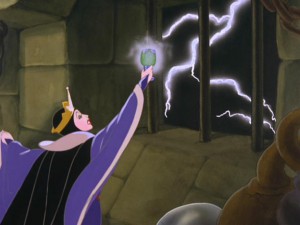
"Snow White and the Seven Dwarfs" was finally debuted in Hollywood on 21 December 1937 at the Carthay Circle Theater in Los Angeles, CA and received a standing ovations from a packed crowd that included many of the big Hollywood celebrities of the day. It went on the be the most successful film at the Box Office until 1941 when "Gone With the Wind" came out. Despite that, it still has won all kinds of awards and made many top ten lists. The most prestigious awards though may have been the special Academy Award given to Walt Disney for the making of the film (that included 7 small statues to accompany the main big one) and making the list of films to be included in the United States National Film Registry in 1989. Fun and often little know facts include how legendary voice actor Pinto Colvig, best known to film audiances as the oiginal voice of Goofy, was also the voice for Grumpy and Sleepy. Also, the original Brother's Grimm tale was one of Walt's favorite stories growing up and the biggest reason why it was the story picked for Disney's first animated film. The other of Walt's favorite childhood stories that would later become a Disney Animated film was "Peter Pan."
My Reaction: Like many people, I grew up with the notion that "Snow White and the Seven Dwarfs" was the first animated film in history. And why not with Disney always showcasing the films as such. Turns out though that after learning more about animation history, Argentine film "El Apostol," made in 1917, was the first. But that said, "Snow White" was still a number of firsts, each and everyone came back to me as I was watching this latest time. It was the first to use Cel-Animation, it was the first animated film in the US or English speaking world for that matter, a swell as the first produced in color and the first made by the Walt Disney. It also started off what is known as "The Walt Disney Animated Classic" cannon and was the first film, live action or animated, to have it's soundtrack released and sold commercially.

With all those firsts, I kind of get taken back every time I watch the film, I mean it is a very big piece of not just Disney or animation history, but American history as well! But, once I let all of that slip my mind and watch the film, I find myself not just transported back into the fantasy land of Snow White, but also the 1930's. The last few years I've had the chance to watch more classic films from the 1930's and after watching those, I can say this film very much is a product of it's time period.

I could not help myself wondering if this film had not been made in the 30's and some other story was the first Disney film and instead, "Snow White" was made today, how different would it be? For starters, I don't think any of the reading found in the original film would be used for a more modern make. I think the over all feel would be different, more animated, hip, with as my wife put it, "More potty humor." Snow White would most likely be more of a "modern woman" which basically means less naive, less "damsel in distress" and more confident in her actions. The Dwarfs would be more goofy then they originally are and the Queen would probably be creepier. But thoughts of how it would look had it been made today aside, while I liked it, it just wasn't as enjoy able to me as some of Walt's other films were or a number of the more modern Disney films. That said, I'm very happy I own it and that I can share it with my kids once I stat having them.
 My Wife's Reaction: I have never seen my wife make fun of a cartoon as much as she made fun of this one. Specifically, she thought it was funny to mock Snow White's voice and singing. But honestly, I can't say as that I blame her. That said, she mostly seemed to like it and either way, this film hold new personal attachments as it was at the Snow White wishing well at Disneyland that I originally proposed to my wife. So the film has some new meaning for both of us.
My Final Grade: (B+) Considering how many top ten list this film has made over the years and how many critics consider this the finest animated film ever made, it may seem to some almost blasphemous that I grade this film as low as I do. But these grades are how I feel about these film, not how others see them. While I like the film and will always respect it for the history it has made, it just was not one of my favorites. While the story was ok, I didn't feel it was as strong as other Disney film, and the characters with the most depth and that you care about the most are the dwarfs, NOT Snow White. In fact, I dare say Snow White is the weakest of the Disney Princesses. But, that said, there is a kind of respect that one must show still for this timeless film.
All images copyright Disney. All rights reserved.
Subscribe to:
Posts (Atom)